

Last updated on July 22nd, 2026 at 08:38 am
Ultrasound imaging plays a vital role in women’s health, offering a safe and effective way to examine the reproductive organs. It is commonly used for early detection, diagnosis, and monitoring of various conditions that may affect the uterus, ovaries, and surrounding structures.
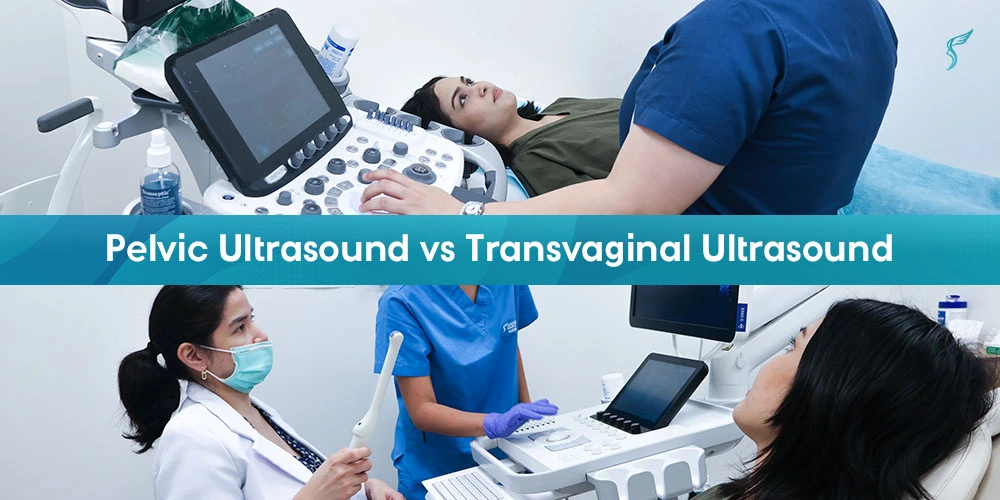
Among the most widely used types are pelvic ultrasound and transvaginal ultrasound. While both use sound waves to create images of internal organs, they differ in technique and the level of detail they provide. Understanding these differences can help patients better appreciate their role in maintaining reproductive health.
What is a Pelvic Ultrasound?
A pelvic ultrasound, also known as a transabdominal ultrasound, is a non-invasive imaging test. During this procedure, a sonographer applies a water-based gel to the lower abdomen and uses a handheld device (transducer) to send sound waves into the body.
In women’s health, pelvic ultrasound is often used to provide a broad overview of the pelvic organs, including the uterus, ovaries, cervix, and bladder.
Key Uses
- Detecting large abnormalities such as Uterine Fibroids and Ovarian Cysts
- Monitoring pregnancy in its later stages
- Identifying pelvic masses
- Assessing general pelvic anatomy
Because of its wider field of view, pelvic ultrasound is commonly used as an initial screening tool or for routine evaluations.
What is a Transvaginal Ultrasound?
A transvaginal ultrasound involves the insertion of a slender probe into the vagina, allowing for a closer and more detailed view of the reproductive organs. This method provides higher-resolution images compared to a standard pelvic ultrasound.
It is particularly valuable for examining the uterus, ovaries, and endometrial lining in greater detail.
Key Uses
- Detecting early pregnancy and complications such as Ectopic Pregnancy
- Evaluating the endometrial lining for abnormalities
- Identifying small fibroids and cysts, including Uterine Fibroids and Ovarian Cysts
- Supporting the diagnosis of Endometriosis
- Monitoring ovulation and fertility
Due to its precision, transvaginal ultrasound is often recommended when more detailed imaging is necessary.
Primary Differences Between the Two
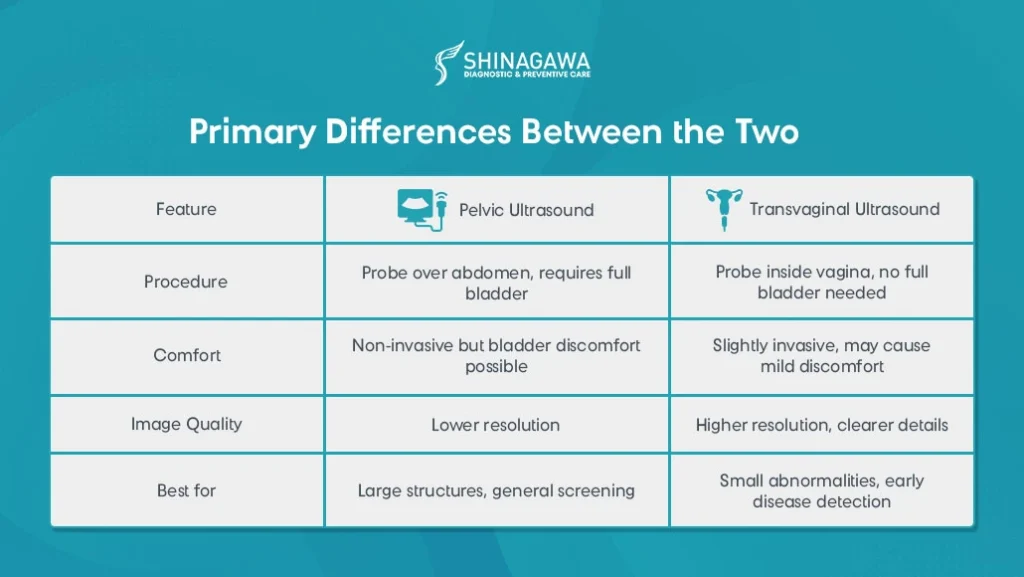
Although both procedures serve similar purposes, they differ in their approach and what they are best at detecting.
Pelvic ultrasound provides a wider, external view of the pelvic organs, making it more effective for identifying larger or more advanced conditions, while transvaginal ultrasound offers a closer, more focused image, excelling at detecting early-stage or subtle abnormalities. In terms of patient experience, pelvic ultrasound is non-invasive, whereas transvaginal ultrasound is minimally invasive but generally well-tolerated.
When is Each Procedure Recommended?
The choice between the two procedures depends on the patient’s condition and the level of detail required.
Pelvic ultrasound is often recommended for routine screenings, general pelvic assessments, or when a wider view is needed. In contrast, transvaginal ultrasound is commonly used for evaluating pelvic pain, abnormal bleeding, infertility concerns, and early pregnancy. In pregnancy care, transvaginal ultrasound is typically preferred during the early stages, while pelvic ultrasound becomes more useful as the pregnancy progresses.
Why Doctors Often Recommend Both
In many cases, healthcare providers may recommend both types of ultrasound to ensure a more comprehensive evaluation.
A pelvic ultrasound offers a general overview, while a transvaginal ultrasound provides detailed imaging. Together, they improve diagnostic accuracy and help guide appropriate treatment or management plans.
Frequently Asked Questions (FAQs)
It may feel slightly uncomfortable, but it should not be painful. If pain occurs, inform your healthcare provider immediately.
In most cases, doctors avoid TVUS for women who have never had sexual intercourse. Alternatives, such as pelvic ultrasound or MRI, are considered.
For most conditions, transvaginal ultrasound provides clearer images and higher accuracy. However, both tests serve unique purposes, and doctors may recommend one or both depending on the case.
Yes. Both are considered safe, non-invasive or minimally invasive, and use sound waves rather than radiation.
Preparation depends on the type of ultrasound. Pelvic ultrasound usually requires a full bladder for clearer images, while transvaginal ultrasound typically needs an empty bladder and is explained beforehand for comfort. Both are safe and commonly done in outpatient settings.
Get your Health Checkup at Shinagawa Diagnostic

Pelvic and transvaginal ultrasounds are essential tools in women’s healthcare, each offering unique advantages. While pelvic ultrasound provides a broad overview of the pelvic organs, transvaginal ultrasound delivers detailed insights that are crucial for early detection and accurate diagnosis.
At Shinagawa Diagnostic, women’s health checkups go beyond standard screenings. Through the Women’s Prime Executive Checkup, patients can undergo a whole abdominal ultrasound (which includes the pelvis) for a broader view of the abdominal cavity, with the option to add a transvaginal ultrasound for even more focused evaluation.