

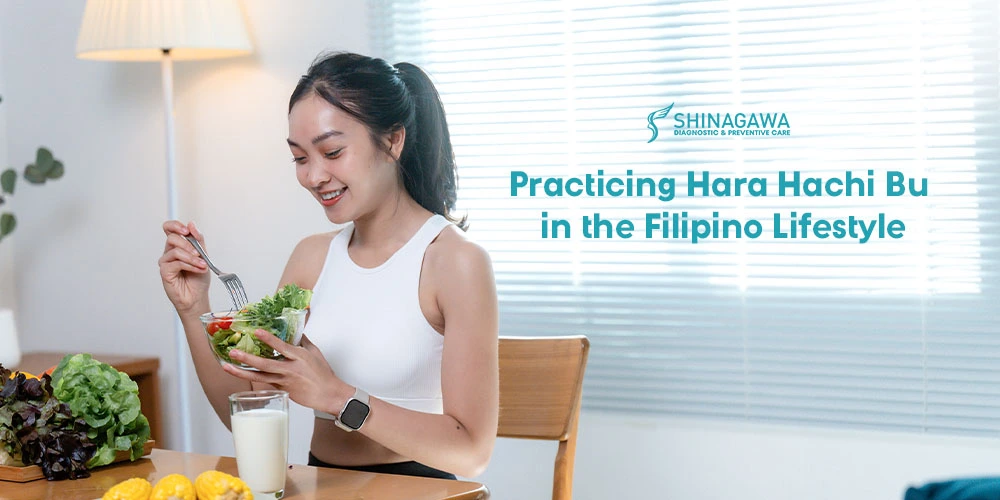
Food has always been a huge part of Filipino culture. Whether it’s birthdays, fiestas, reunions, or simple family dinners, meals are often seen as moments of celebration and connection.
We tend to show our love through food — so much so that second servings are encouraged, large portions are prepared, and making sure everyone leaves the table full and satisfied.
We tend to show our love through food — so much so that second servings are heavily encouraged, generous portions are prepared, and no one leaves the table without feeling full and satisfied.
But while enjoying food is part of life, consistently overeating can eventually affect overall health. This is where the Japanese concept of Hara Hachi Bu becomes relevant — especially for Filipinos who want to develop healthier eating habits without completely giving up the food they love.
What is Hara Hachi Bu?
Hara Hachi Bu is a traditional Japanese eating principle which means eating until you are only 80% full. It originated in Okinawa, one of the world’s well-known “Blue Zones,” recognized for having one of the highest concentrations of centenarians and longest life expectancies, with many residents living beyond 100 years old.
Instead of waiting until you feel overly stuffed, the practice encourages mindful eating and moderation. It’s not about strict dieting or depriving yourself of your favorite meals. Rather, it’s about learning when your body has already had enough.
Applying Hara Hachi Bu to the Filipino Lifestyle
For many Filipinos, this may sound challenging. Rice-heavy meals, unlimited buffets, celebrations, and the familiar “sayang ang pagkain” mindset often encourage people to eat more than they actually need. Some also grew up being taught to always finish everything on their plate, even when they are already full.
However, practicing Hara Hachi Bu does not mean wasting food or completely changing our eating culture. In fact, it can be practiced through simple and realistic habits.
Eating slower, avoiding immediate second servings, using more balanced portions, and saving leftovers for later instead of forcing yourself to finish everything are small adjustments that can make a big difference over time.
How Overeating Affects Long-Term Health
Consistently eating beyond fullness can contribute to several lifestyle-related conditions, including:
- Weight gain and obesity
- High blood pressure
- Type 2 diabetes
- Fatty liver disease
- Digestive and metabolic issues

Applying Hara Hachi Bu as a preventive mindset can help people become more conscious of their eating habits before health problems develop.
While portion control and mindful eating are beneficial, proper nutrition still varies from person to person. Age, lifestyle, activity level, and existing medical conditions all influence what a balanced diet should look like.
This is why regular health monitoring and professional nutritional guidance remain important.
Get your Health Checkup at Shinagawa Diagnostic
Preventive care goes beyond simply eating less. Routine health checkups help monitor important indicators such as blood sugar, cholesterol levels, weight, and overall metabolic health.
Alongside this, consulting with a nutritionist-dietitian can help individuals better understand portion control, meal balance, and sustainable eating habits tailored to their specific needs.
At Shinagawa Diagnostic & Preventive Care, our Nutrition & Dietetics Counseling services allow patients to cultivate healthier eating habits while aligning their nutrition with their overall health status and medical findings.