

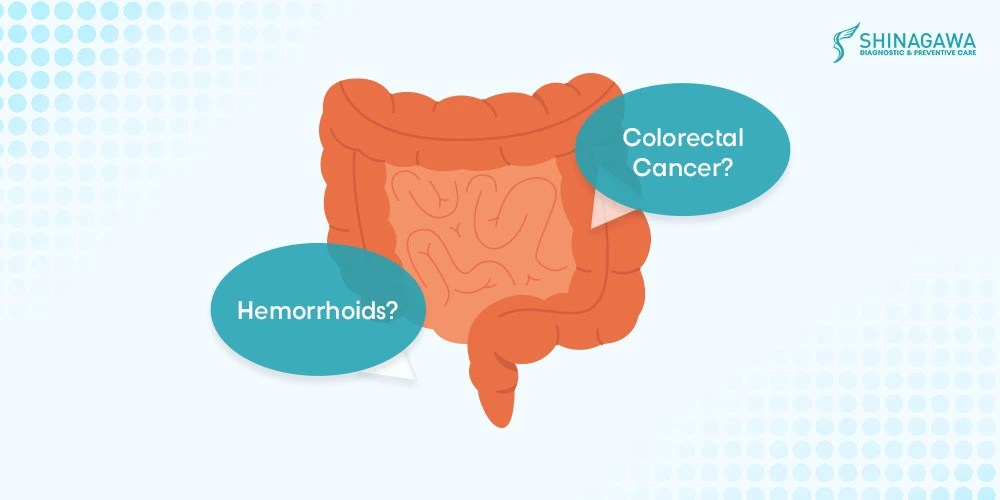
It’s easy to dismiss rectal discomfort or bleeding as something minor—most often, hemorrhoids. After all, they’re common, often harmless, and something many people experience at some point in their lives.
But here’s where it becomes risky—some of the symptoms associated with hemorrhoids can closely resemble those of colorectal cancer. Because of this overlap, it becomes dangerously easy to misjudge what your body is trying to tell you. And when it comes to your health, assumptions can delay the care you may urgently need.
Why Hemorrhoids and Colorectal Cancer Are Often Confused
Hemorrhoids and colorectal cancer affect the same general area, which is why they are frequently mistaken for one another.
Hemorrhoids are widely known and often self-diagnosed, leading many to associate any rectal symptom to them without further investigation. There’s also a common misconception that serious conditions like colorectal cancer always come with severe or alarming signals. In reality, early-stage colorectal cancer can be subtle and easily overlooked.
How to Tell the Difference
While the symptoms may appear similar at first glance, there are important distinctions to be aware of.
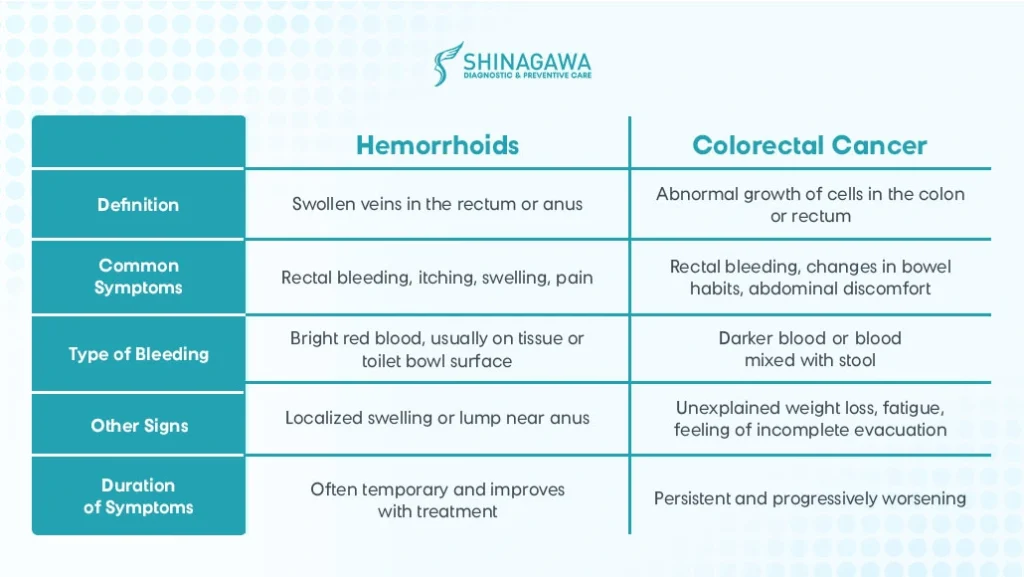
Hemorrhoids typically cause bright red blood that appears after a bowel movement, often seen on tissue or in the toilet bowl. They may also come with itching, swelling, or pain around the anal area. Symptoms can flare up and then subside, especially with lifestyle adjustments.
Colorectal cancer, on the other hand, tends to present more persistently. Bleeding may appear darker or be mixed within the stool rather than separate from it. You might also notice ongoing changes in bowel habits—such as prolonged diarrhea or constipation—along with unexplained weight loss, fatigue, and a feeling that the bowel doesn’t fully empty. Most importantly, these symptoms do not go away over time.
Why Early Detection is Important
One of the biggest dangers lies in assuming that all rectal bleeding is harmless. While it’s true that many cases are due to hemorrhoids, persistent or unusual symptoms should never be ignored.

When it comes to colorectal cancer, timing is everything. Early detection dramatically increases the chances of successful treatment and, in many cases, can even prevent cancer from developing altogether. Precancerous growths, known as polyps, can exist in the colon long before they turn into cancer. Identifying and removing these early can stop the disease before it starts.
The Role of Colonoscopy
One of the most effective ways to detect colorectal issues early is through screening procedures like colonoscopy. This procedure allows doctors to directly examine the inside of the colon and rectum using a flexible camera.
Through colonoscopy, abnormalities such as inflammation, bleeding sources, polyps, or tumors can be identified with precision. More significantly, it also enables the removal of precancerous polyps during the same procedure—making it both diagnostic and preventive.
Screening is typically recommended for individuals over a certain age or for those with risk factors such as family history or lifestyle considerations. However, it’s not limited to these groups. Anyone experiencing symptoms should consider consulting a healthcare provider about appropriate testing.
Get your Health Checkup at Shinagawa Diagnostic
Your body has its own way of signaling when something isn’t right—the real challenge is choosing to listen. Yet in reality, conversations about bowel habits and rectal health are often avoided due to embarrassment or stigma.
This hesitation can lead many to ignore warning signs or delay seeking medical advice altogether. If what you suspect to be hemorrhoids does not improve after seven days of at-home treatment, it’s best to seek timely medical consultation rather than make assumptions.
At Shinagawa Diagnostic & Preventive Care, patients can consult with experienced doctors to properly assess symptoms and rule out more serious conditions such as colorectal cancer. Comprehensive health checkups like the VIP Shinagawa Dock include essential procedures such as colonoscopy, allowing for early detection and greater peace of mind.