


Last updated on July 27th, 2026 at 10:23 am
Seeing the word “malignant” on a medical result can be scary. In simple terms, malignant means cancerous — a growth that can invade nearby tissues and may spread to other parts of the body. That ability to spread is what makes it serious.
However, malignant does not automatically mean a hopeless outcome. Many conditions can be better understood and managed when detected early, highlighting the importance of regular screenings, accurate information, and timely evaluation.
What is a Malignant Tumor?
A malignant tumor is an abnormal growth of cells that divide uncontrollably and can invade surrounding tissues or spread to other parts of the body through the blood or lymphatic system.
This is caused by genetic mutations in cells that disrupt the normal balance between cell growth and death, malignant tumors can be triggered by a combination of factors, including:
- Environmental and lifestyle factors – such as smoking, excessive alcohol consumption, poor diet, obesity, and exposure to harmful chemicals or radiation.
- Biological factors – including inherited genetic mutations, hormonal imbalances, chronic inflammation, or infections such as HPV (linked to cervical cancer) or H. pylori (linked to stomach cancer).
How do malignant, benign, and precancerous conditions differ?
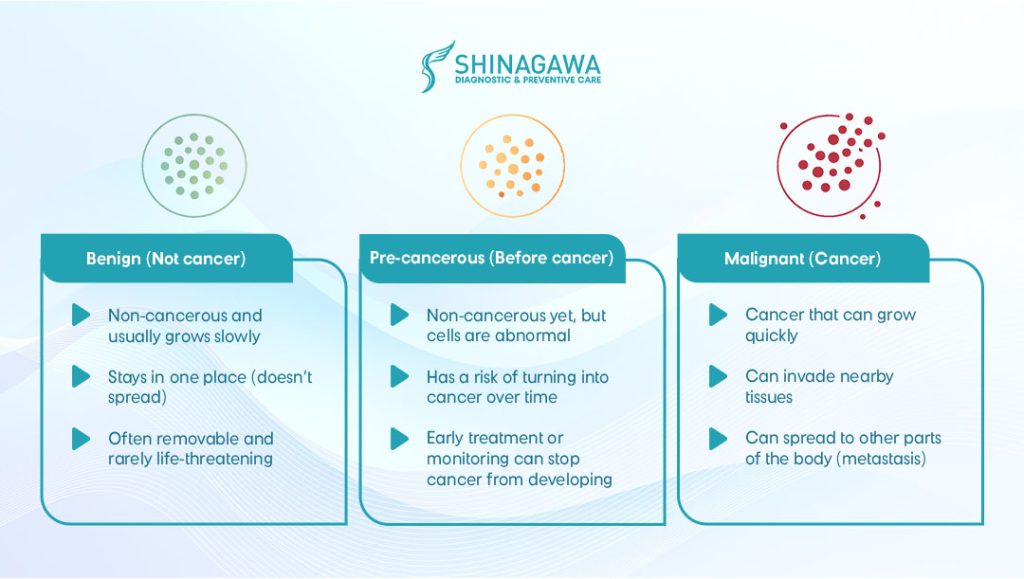
A benign tumor is usually non-cancerous and does not spread. While localized and generally not life-threatening, they can sometimes cause problems if they press on organs or nerves. In contrast, a malignant tumor can behave more aggressively, destroying nearby healthy tissues.
Precancerous or premalignant conditions occur when cells show abnormal changes that could develop into cancer over time. Although these cells are not cancerous yet, many precancerous conditions are treatable, especially when detected early through screening.
How is a malignant tumor diagnosed?
Diagnosing a malignant tumor typically involves reviewing a patient’s medical history and performing different tests and procedures. Common steps include:
- Imaging tests – such as X-rays, ultrasound, CT scans, or MRI, help locate tumors and assess their size, position, and extent.
- Laboratory tests – including blood tests and tumor markers, provide important clues about abnormal cell activity and overall health status.
- Endoscopy – allows direct visualization of the digestive tract and other internal structures, making it easier to identify abnormal growths, inflammation, or suspicious lesions.
- Biopsy – the most definitive test, where a small tissue sample is examined under a microscope to confirm whether a tumor is malignant.
Why Early Detection Is Important
Early detection matters because it finds abnormal or cancerous cells before they grow or spread. When a malignant tumor is caught early, treatment is often more effective, outcomes are better, and the chances of long-term survival are higher.
Regular checkups and screening tests are key tools in spotting potential problems before symptoms appear, giving patients the best opportunity to protect their health.
Symptoms of malignant tumors vary depending on the type of cancer and the area affected. Some common warning signs include:
- Unexplained lumps or swelling, such as in the breast, neck, or testicles
- Persistent pain in the head, back or bones
- Unexplained weight loss
- Persistent fatigue or infections that don’t heal
- Fever and Night Sweats
- Changes in the skin, including jaundice, darkening, or new/changed moles
People Also Ask: Conversational FAQs
In medical documentation, “malignant” typically means the growth is cancerous. If your report says “suspicious for malignancy,” it means cancer is possible and confirmation (often via biopsy/histopathology) is needed.
No. Malignant describes the nature of the tumor (cancerous). A tumor’s stage helps describe how far it has spread. It can be detected early and still be treatable.
Not always. Some malignant tumors are still localized. Doctors check for spread through staging tests and by assessing lymph node involvement and other findings.
Metastasis is when cancer cells travel through the blood or lymph system and form new tumors in other organs. It’s one of the main reasons doctors take malignant tumors seriously.
Tumor markers (like PSA, CEA, CA-125) can be helpful, but they usually do not confirm cancer by themselves. A biopsy/histopathology result is often the clearest confirmation.
No. Cancer is not an infectious disease. You cannot “catch” it from sharing food, hugging, or being near someone with cancer.
Get your Cancer Screening at Shinagawa Diagnostic
It’s important to remember that symptoms don’t always indicate cancer. However, if they persist, consulting a healthcare professional is always recommended. Regular checkups and screenings are key to early detection, helping improve outcomes and manage potential risks.
At Shinagawa Diagnostic, we emphasize the importance of early detection by including services like Tumor Marker tests. These screening tests help identify different types of cancer, such as colon, pancreatic, liver, breast, ovarian, and prostate, and are supported by essential and advanced procedures to ensure the best and effective evaluation of your health.
Cancer Screening Blood Tests (tumor markers) are included in our Executive Checkups, including the Men’s and Women’s Prime, Platinum Shinagawa Dock, and VIP Shinagawa Dock health packages.
Furthermore, the VIP Shinagawa Dock is also especially designed to take cancer screening a step further by including a Brain MRI + Brain MRA + Neck MRA Scan plus variations of endoscopy procedures depending on your needs.