


Many people assume that drinking heavily only once or twice a month is harmless. Because it is not frequent, binge drinking is often dismissed as a low-risk behavior. However, even occasional consumption of alcohol can strain the liver and contribute to long-term damage.
While the body can recover from short-term alcohol effects, repeated episodes of heavy drinking may still lead to gradual yet structural changes if left unaddressed.
How Alcohol Affects the Liver
The liver is your body’s primary filtration system. Every substance you consume (including alcohol) passes through it for processing and elimination. In moderate amounts, the liver handles alcohol efficiently. But when large quantities arrive in a short period, the liver is pushed well beyond its comfortable capacity.
To break down alcohol, the liver produces enzymes that convert it into acetaldehyde, a highly toxic compound. Under normal drinking conditions, acetaldehyde is processed quickly. During a binge, however, it accumulates faster than the liver can clear it — triggering oxidative stress, cell damage, and inflammation.
Even a single yet heavy drinking session can cause measurable liver cell injury. Repeated over months and years, these episodes leave behind a trail of cumulative damage.
What is Liver Scarring?
Liver scarring, known medically as fibrosis, is the body’s natural response to repeated liver injury. When liver cells are damaged, the body attempts to repair itself by producing fibrous connective tissue. This scar tissue is tough, inflexible, and cannot perform any of the functions that healthy liver cells do.
Over time, as scar tissue accumulates, it begins to crowd out functioning liver cells and disrupts the liver’s internal architecture. Blood flow through the liver becomes restricted, and the organ’s ability to filter toxins, regulate metabolism, and produce essential proteins gradually declines. In its most advanced form, this scarring becomes cirrhosis — a largely irreversible condition that significantly impairs overall health and can become life-threatening.
How alcohol leads to liver scarring
The pathway from a night of heavy drinking to liver scarring is not immediate. It is a slow, progressive process that unfolds over repeated episodes of alcohol-induced injury and incomplete recovery.
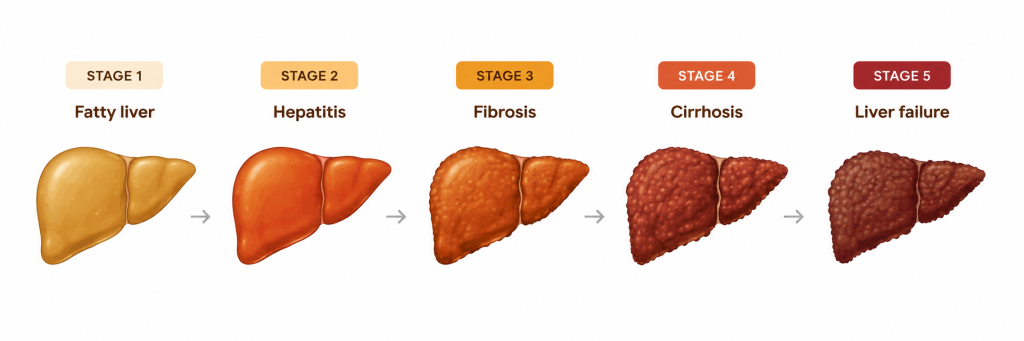
Each binge episode adds fat to liver cells (stage one), which is initially reversible if drinking stops. But when heavy drinking continues — even intermittently — the resulting inflammation progresses to alcoholic hepatitis. The liver’s repair response to this ongoing injury produces scar tissue (fibrosis). As more and more scar tissue forms, cirrhosis sets in, and eventually liver function may fail entirely.
Effects of Liver Scarring on the Body
Because the liver is involved in hundreds of bodily functions, scarring affects nearly every system in the body. As liver function declines, the consequences extend far beyond digestive health:
- Toxin buildup: Reduced filtration allows harmful substances to accumulate in the bloodstream
- Impaired metabolism: Disrupted processing of nutrients, fats, and blood sugar levels
- Portal hypertension: Increased pressure in blood vessels feeding the liver, risking dangerous varices
- Cognitive effects: Toxin accumulation can impair memory, concentration, and mood
- Weakened immunity: Compromised immune protein production increases infection susceptibility
- Medication sensitivity: Impaired drug metabolism increases the risk of medication toxicity
Warning Signs Often Ignored
Liver disease is frequently called a “silent” illness as it rarely causes obvious symptoms in its early stages. Most people dismiss early warning signs as general tiredness or digestive trouble, and by the time more definitive symptoms appear, significant damage may already be present.
- Persistent fatigue
- Abdominal discomfort or bloating
- Nausea and Loss of appetite
- Dark urine or pale stools
- Easy bruising or bleeding
- Yellowing of the skin or eyes (jaundice)
Risk increases when binge drinking occurs alongside:
- Poor diet
- Smoking
- Obesity
- Chronic stress or lack of sleep
- Existing conditions such as diabetes or high cholesterol
Why Early Detection Is Important
Fatty liver and early-stage fibrosis are conditions that can be reversed or significantly slowed, but only when caught early enough. Once cirrhosis sets in, the damage is largely permanent, and management shifts from reversal to preventing further decline.
Early detection through routine blood tests and liver imaging allows physicians to identify elevated liver enzymes, detect structural changes, and intervene before damage becomes irreversible. This is why regular health monitoring is so critical for anyone who drinks alcohol, even sparingly.
Proactive screening also establishes a health baseline, making it easier to detect changes over time. A single liver enzyme reading in isolation tells you one moment; a series of readings over years tells you a story — and that story can save your life.
Get your Health Checkup at Shinagawa Diagnostic
Protecting the liver does not necessarily mean completely avoiding social occasions or celebrations. Instead, it involves practicing mindful alcohol consumption and making healthier lifestyle choices overall.
Furthermore, individuals who consume alcohol more frequently than usual are encouraged to incorporate routine medical checkups into their lifestyle to ensure that liver function and overall health are properly monitored.
At Shinagawa Diagnostic, we believe that the best time to protect your liver is before symptoms appear. Essential services such as Liver Function Tests as well as Ultrasound and other imaging exams are integrated directly into our health packages, making proactive monitoring accessible, convenient, and thorough — so you don’t have to wait for a health scare to start taking care of yourself.