

Digestive discomfort is something many people experience from time to time. From bloating and stomach pain to irregular bowel movements, these symptoms are often brushed off as stress, diet-related issues, or simply “tummy issues.” However, while Irritable Bowel Syndrome (IBS) is a common digestive condition, some symptoms may also point to something more serious — including colon cancer.
Because IBS and colon cancer can share similar symptoms, understanding their differences is important. Knowing when to seek medical attention and undergo proper screening could make a significant difference in protecting your long-term health.
What is Irritable Bowel Syndrome (IBS)?
Irritable Bowel Syndrome, commonly known as IBS, is a digestive disorder that affects how the intestines work. Although it can be uncomfortable and disruptive to daily activities, IBS itself does not cause permanent damage to the intestines and is not considered life-threatening.
Common IBS symptoms include:
- Abdominal pain or cramping
- Bloating and gas
- Diarrhea, constipation, or both
- Changes in bowel habits
- Symptoms that come and go over time
For many individuals, IBS symptoms may be triggered by stress, certain foods, lack of sleep, or lifestyle factors.
What is Colon Cancer?
Colon cancer develops in the large intestine or rectum, usually beginning as small growths called polyps that may become cancerous over time. Unlike IBS, colon cancer is a serious medical condition that requires early detection and treatment.
Some symptoms of colon cancer may initially appear similar to IBS, which is why many people overlook warning signs.
Common symptoms of colon cancer include:
- Persistent changes in bowel habits
- Blood in the stool
- Ongoing abdominal pain or discomfort
- Unexplained weight loss
- Fatigue or weakness
- Feeling that the bowel does not empty completely
While these symptoms do not automatically mean cancer is present, they should never be ignored , especially if they persist or worsen over time.
IBS vs Colon Cancer: What’s the Difference?
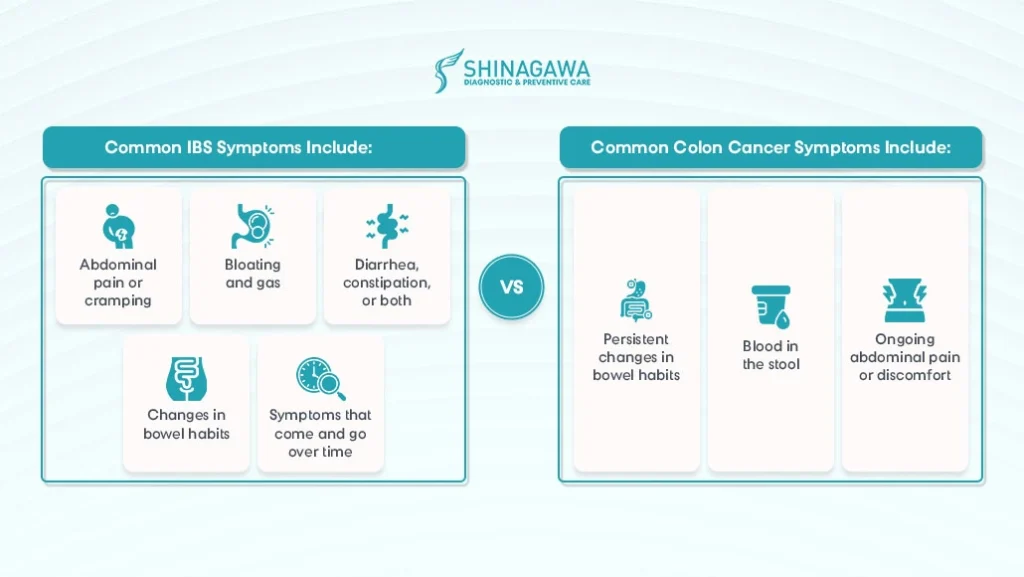
One of the biggest challenges is that both IBS and colon cancer can involve bloating, abdominal discomfort, constipation, and diarrhea. However, there are key differences that can help identify when symptoms may require further medical evaluation.
IBS symptoms often fluctuate and may improve with dietary or lifestyle adjustments. Colon cancer symptoms, on the other hand, tend to become more persistent and progressive over time.
Some warning signs more commonly associated with colon cancer include:
- Rectal bleeding or blood in stool
- Sudden unexplained weight loss
- Persistent fatigue
- Severe or worsening abdominal pain
- Symptoms beginning later in adulthood
- Family history of colon cancer
If any of these symptoms are present, consulting a healthcare professional is highly recommended.
Why Early Screening Matters
Many people delay consultations because they assume their symptoms are only caused by IBS or minor digestive issues. Unfortunately, this can lead to delayed diagnosis if a more serious condition is present.
The good news is that colon cancer is highly treatable when detected early. Preventive healthcare and proper screening play a vital role in identifying abnormalities before they become more serious.

This is especially important for individuals with recurring digestive symptoms, a family history of colon cancer, or lifestyle-related risk factors.
How Colonoscopy Help Detect Colon Cancer
Procedures like colonoscopy allow doctors to closely examine the digestive tract and detect potential concerns early, including:
- Polyps
- Inflammation
- Ulcers
- Abnormal growths
- Early signs of colon cancer
A colonoscopy, in particular, is considered one of the most effective tools for colon cancer prevention because potentially harmful polyps can often be identified and removed before they develop into cancer.
Although many people feel nervous about undergoing these procedures, they are important steps toward protecting digestive health and gaining peace of mind.
Get your Health Checkup at Shinagawa Diagnostic
Understanding the difference between IBS and colon cancer is not about creating fear — it is about raising awareness, encouraging early detection, and reminding people that listening to their bodies could ultimately save their lives.
At Shinagawa Diagnostic, we continue to encourage Filipinos to prioritize preventive healthcare through regular consultations and recommended screenings. While all of our health packages include Fecal Occult Blood Test (FOBT) as part of the sample collection process, specialized executive checkups such as the VIP Shinagawa Dock provide a more comprehensive approach to digestive health.
Through advanced services like colonoscopy, patients are given better opportunities for early detection and identification of possible signs of colorectal cancer, helping them take proactive steps toward better long-term health.