


Water makes up roughly 60% of the human body, yet most of us still aren’t sure how much we should actually be drinking each day. This question matters even more when it comes to kidney health.
Your kidneys work around the clock, filtering waste from your bloodstream and helping maintain the body’s delicate fluid balance. So how much water is really enough to keep them running smoothly?
Why Hydration Matters for Kidney Health
The kidneys’ main job is to remove waste products and excess fluid from the body through urine. When you stay properly hydrated, your kidneys can do this efficiently, flushing out toxins while keeping electrolytes like sodium and potassium in balance.
Without enough water, this process becomes harder, and your kidneys have to work overtime just to keep up.
What Happens When You Don’t Drink Enough Water?
When water intake is low, urine becomes more concentrated because there is less water available to dilute waste products. As a result, the kidneys must work harder to conserve water and maintain the body’s fluid balance.
Over time, inadequate fluid intake may increase the risk of certain kidney-related problems, including:
- Kidney stones
- Urinary tract infections (UTIs)
- Reduced kidney function
Although occasional dehydration may not cause lasting harm in healthy individuals, consistently low fluid intake can place unnecessary strain on the kidneys.
How Much Water Do You Really Need?
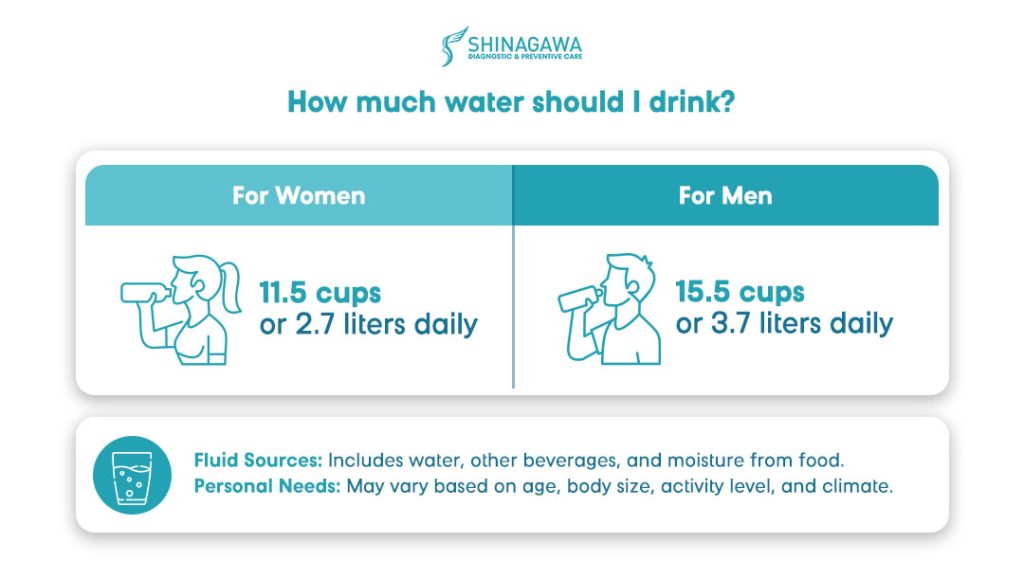
There’s no single number that works perfectly for everyone, but research suggests that most healthy adults can meet their hydration needs with approximately 11.5 cups (2.7 liters) of total fluids per day for women and 15.5 cups (3.7 liters) for men. That figure includes fluid from all sources, not just the water you drink, so soups, fruits, vegetables, and other beverages all count toward the total.
However, individual hydration needs can vary depending on several factors, such as:
- Age
- Body size
- Activity level
- Climate and weather conditions
- Certain medical conditions
Rather than fixating on hitting a precise glass count, it’s more useful to think of hydration as something you maintain steadily throughout the day, sipping water regularly rather than gulping large amounts all at once.
A Simple Way to Check Your Hydration
One of the easiest ways to gauge whether you’re drinking enough is to look at the color of your urine.
Pale yellow generally signals that you’re well hydrated, while darker yellow suggests your body could use more fluids. Keep in mind that certain medications, vitamins, and supplements can also affect urine color, so this method works best as a general guide, helping you maintain a healthy hydration pattern.
It’s also worth noting that completely clear, colorless urine isn’t necessarily ideal all the time as it may be a sign that you’re drinking more water than your body actually needs.
Get Your Health Checkup at Shinagawa Diagnostic

Drinking enough water is an important habit, but it can’t catch every kidney problem on its own. Many kidney conditions develop quietly, without obvious symptoms, until they’ve progressed further than anyone would like. That’s why routine health screenings matter just as much as good hydration habits.
Shinagawa Diagnostic offers essential blood tests, including Kidney Function and Electrolyte panels, that can help assess how well your kidneys are working and catch potential concerns early. Included in all our health packages, pairing consistent hydration with regular checkups gives you a fuller picture of your kidney health, rather than relying on water intake alone.