

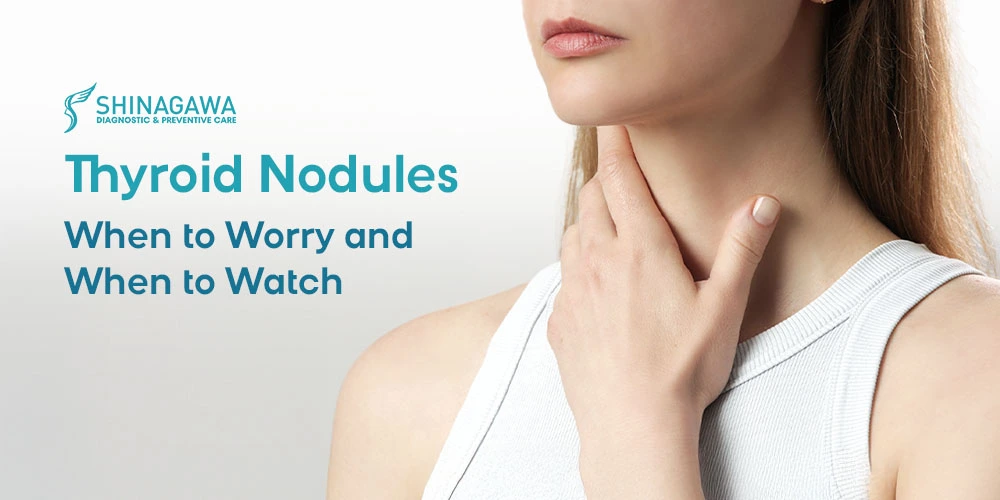
Receiving news that you have a thyroid nodule can be unsettling — but it helps to understand what you are actually dealing with. A thyroid nodule is a small lump or abnormal growth in the thyroid gland, the butterfly-shaped gland sitting at the front of your neck that regulates metabolism, energy, and several vital hormones. These growths are common, and the vast majority are benign.
That said, not all nodules are the same. Some can affect thyroid function, grow large enough to cause discomfort, or in rarer cases, signal something more serious. Knowing when a nodule warrants concern, what role its size plays in medical decisions, and how to approach evaluation are questions worth answering.
What Are Thyroid Nodules?
Thyroid nodules are abnormal growths that form within the thyroid gland. Most produce no symptoms and are discovered incidentally, mostly during a routine physical exam or an imaging test .
Nodules vary in composition. They can be solid, made entirely of thyroid tissue; cystic, meaning fluid-filled; or mixed, containing both tissue and fluid. Their composition, along with other characteristics, plays a role in determining how closely they need to be monitored.
When Should a Thyroid Nodule Concern You?
Most thyroid nodules are benign and require no immediate treatment. However, certain symptoms suggest the nodule may be pressing on surrounding structures or behaving in a way that warrants prompt medical attention:
- Difficulty breathing — the nodule may be pressing on the windpipe
- Difficulty swallowing — a sensation of food getting stuck or the throat feeling restricted
- Persistent hoarseness or voice changes — possible involvement of the vocal cords
- Rapid growth — a nodule that enlarges noticeably over weeks or months
- Sudden or severe neck pain — particularly if it develops without an obvious cause
- Visible or asymmetrical neck swelling — a lump that is growing or changing in appearance
- Enlarged lymph nodes — which may indicate a higher risk of malignancy
If you experience any of these symptoms, consult an endocrinologist promptly.
Thyroid Nodule Size: Does Bigger Mean More Dangerous?
Size is one factor doctors consider when evaluating a thyroid nodule — but it is not the only one, and it is not always the most important.
In general, nodules smaller than 1 centimeter are considered low-risk and are often monitored without further intervention, particularly if they show no suspicious features on imaging. Nodules between 1 and 4 centimeters may require closer evaluation, including an ultrasound-guided fine needle aspiration (FNA) biopsy, depending on their appearance. Nodules larger than 4 centimeters are more likely to be recommended for surgical evaluation, regardless of whether they appear benign, because size alone can cause compression symptoms and makes thorough biopsy sampling more difficult.
That said, a small nodule with suspicious characteristics — such as irregular borders, calcifications, or abnormal blood flow — can be of greater concern than a larger one with a benign appearance. Size informs the decision, but it does not make it.
How Doctors Evaluate Thyroid Nodules
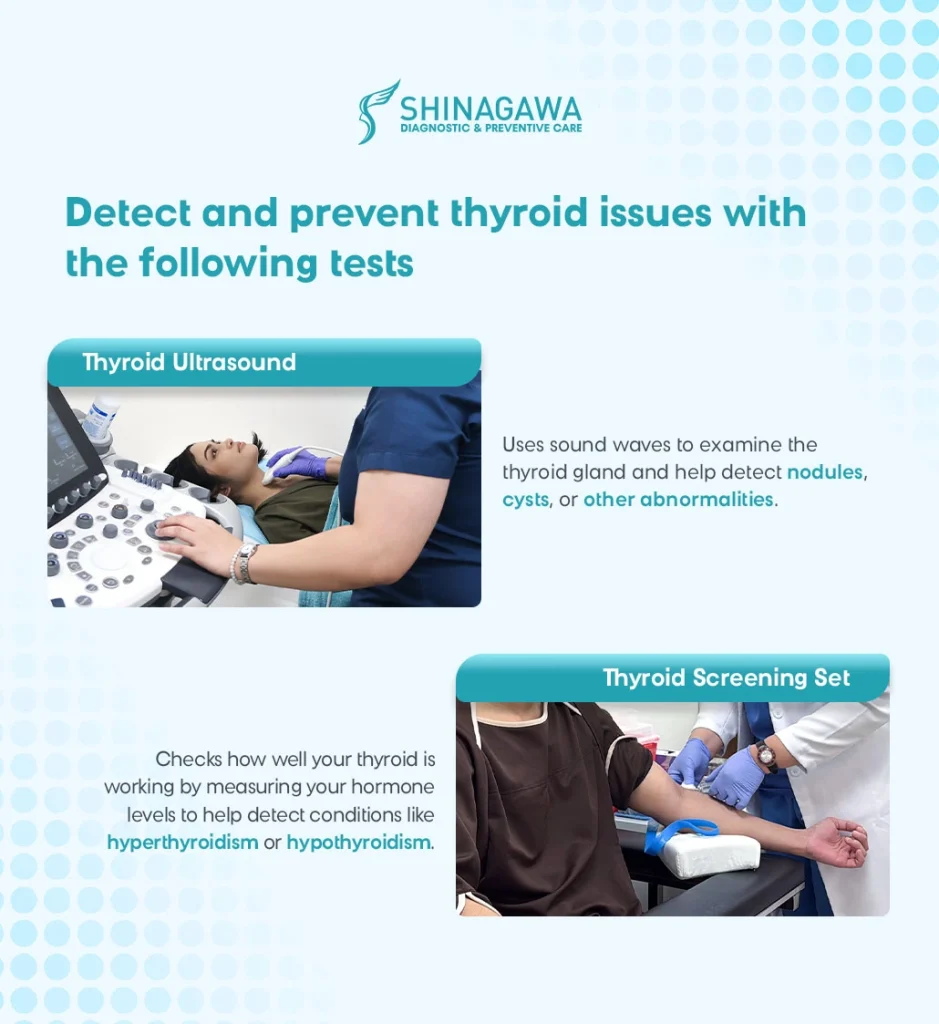
When a thyroid nodule is found, evaluation typically follows a structured approach to determine whether it is benign, requires monitoring, or needs further intervention.
The process often begins with a Thyroid Ultrasound, which provides detailed information about the nodule’s size, composition, borders, and internal characteristics. These features help doctors assess the nodule’s risk level and determine the most appropriate next steps.
In addition to imaging, Thyroid Function Tests may be recommended to evaluate how well the thyroid gland is working. These tests measure levels of TSH (thyroid-stimulating hormone) and other thyroid hormones to determine whether the nodule is affecting thyroid function. Some nodules are considered “hot,” meaning they produce excess hormones, while others are “cold” and do not, which may carry a slightly higher risk of malignancy.
To help detect thyroid imbalances, Shinagawa Diagnostic offers a Thyroid Screening Set that measures TSH, the hormone that signals the thyroid to produce hormones; FT4, the thyroid’s primary hormone output; and FT3, the active hormone that directly influences metabolism, heart rate, and energy levels.
Depending on the results of the initial evaluation, follow-up monitoring may be recommended for nodules that appear low-risk but still warrant periodic reassessment. Regular ultrasound imaging at defined intervals allows doctors to monitor any changes in the nodule’s size or appearance over time, helping ensure that any concerning developments are detected early.
Risk Factors That Make Nodules More Concerning
While most thyroid nodules are benign, certain factors increase the likelihood that a nodule may require more thorough evaluation:
- Age and sex — thyroid nodules are more common in women, but malignant nodules are proportionally more frequent in men
- Age extremes — nodules found in children or adults over 70 tend to carry a higher risk of malignancy
- Family history — a personal or family history of thyroid cancer or certain genetic syndromes increases risk
- Radiation exposure — prior radiation to the head or neck, particularly during childhood, is a well-established risk factor
- Rapid nodule growth — a nodule that enlarges quickly over a short period warrants prompt evaluation
- Suspicious ultrasound features — irregular margins, microcalcifications, increased vascularity, and taller-than-wide shape are characteristics associated with higher malignancy risk
The presence of one or more of these factors does not confirm cancer — but it does shift the approach toward earlier and more thorough investigation.
Get Your Health Checkup at Shinagawa Diagnostic
Thyroid nodules are common, and most are benign. However, certain factors can warrant further investigation. By understanding when to seek evaluation and when monitoring is appropriate, patients are better equipped to make informed decisions about their health.
At Shinagawa Diagnostic & Preventive Care, our goal is to provide expert evaluation, advanced diagnostics, and compassionate care. Whether you need a thyroid ultrasound, a biopsy, or ongoing monitoring, our team is here to help you protect your thyroid health and overall well-being, with the clarity and confidence that comes from knowing exactly where you stand.