


Why cancer doesn’t spread from person to person
Why one might think that cancer is contagious
People Also Ask: Common Questions About Cancer and Contagion
No. There is no evidence that close contact—including kissing, touching, having sex, sharing meals, or breathing the same air—with someone who has cancer can give you cancer. Their cancer cells would not usually survive in your body because your immune system would destroy them as foreign.
No. Tuberculosis and COVID‑19 are infectious diseases caused by specific germs that spread from person to person; cancer is not. Cancer is driven by changes in your own cells and does not spread through the air or droplets.
Certain cancers are linked to infections that can be transmitted between people, such as HPV (associated with cervical cancer), hepatitis B and C (linked to liver cancer), and H. pylori (related to stomach cancer). While these infections can increase the risk of developing cancer over time, it is the infection—not the cancer itself—that is contagious.
There is no need to avoid normal contact with a relative who has cancer for fear of contagion. Children can safely hug, visit, and show support, as long as you follow any infection‑control instructions given by the healthcare team.
Modern evidence does not support the idea that biopsy or surgery makes cancer spread faster or become contagious. These procedures are key parts of accurate diagnosis and effective treatment.
The Role of Tumor Marker Tests in Early Detection and Prevention
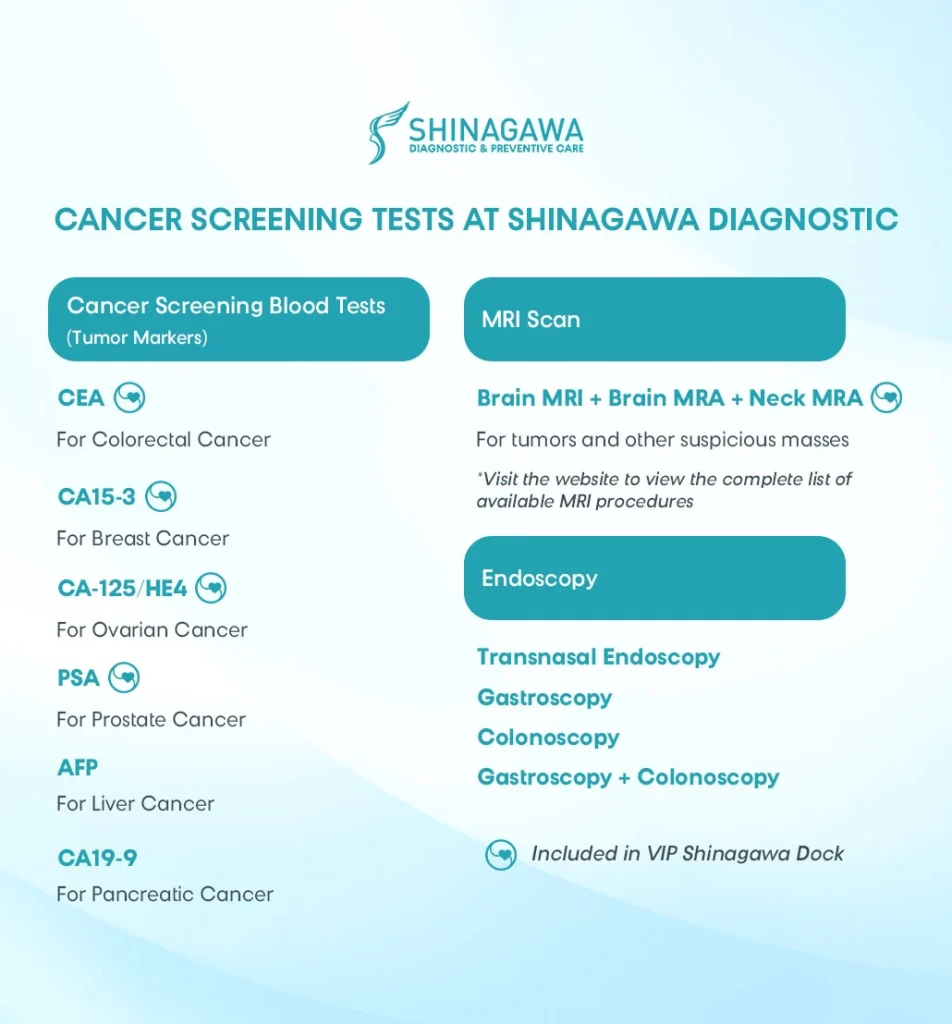
Regular health checkups, especially those that include tumor marker tests, play a vital role in addressing cancer concerns and misconceptions.
These tests can detect early signs of certain cancers, often before symptoms appear, giving individuals the best chance for successful treatment. They also reinforce the fact that cancer develops within the body and is not contagious, helping to dispel myths and reduce unnecessary fear.
For people with higher risk factors, tumor marker tests can provide important monitoring, guide preventive measures, and inform lifestyle choices.
Get your health checkup at Shinagawa Diagnostic
It’s natural to feel concerned about cancer, but the best way to take control is through the right approach. Regular health checkups, accurate information, and a clear understanding of your current health status are key to prevention and early detection.
At Shinagawa Diagnostic, the VIP Shinagawa Dock is specially designed for early cancer detection. It includes tumor marker tests, MRI imaging, and endoscopic procedures—offering the most essential tools to identify potential signs of various types of cancer at the earliest stage and guide timely preventive action.