

Last updated on July 8th, 2026 at 09:45 am
Heart health isn’t usually the first thing on people’s minds during the holidays, but perhaps it should be.
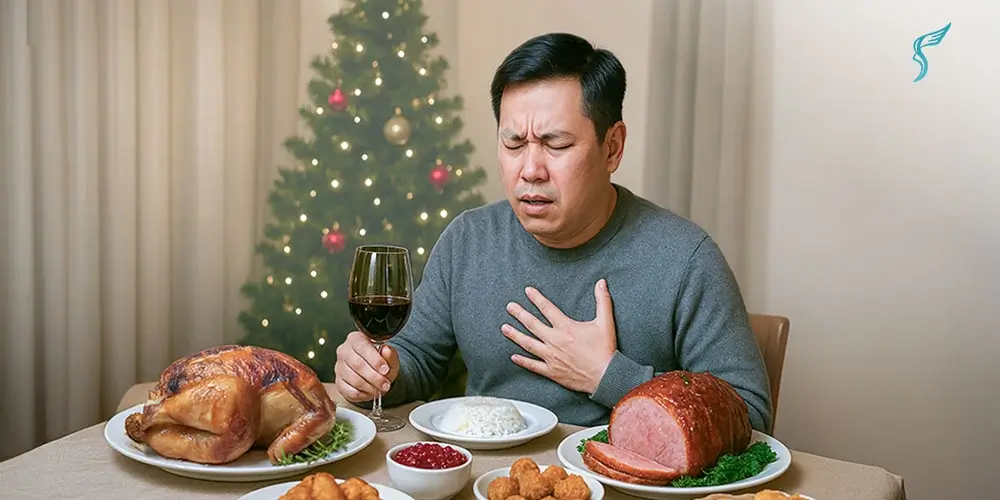
The combination of increased alcohol and food consumption, colder weather, and busy schedules can set the stage for Holiday Heart Syndrome (HHS)—a sudden episode of irregular heartbeat that can strike without warning.
Although people often associate heart rhythm issues with existing medical conditions, HHS is known to affect individuals from all health backgrounds, making early awareness crucial.
What Causes Holiday Heart Syndrome?
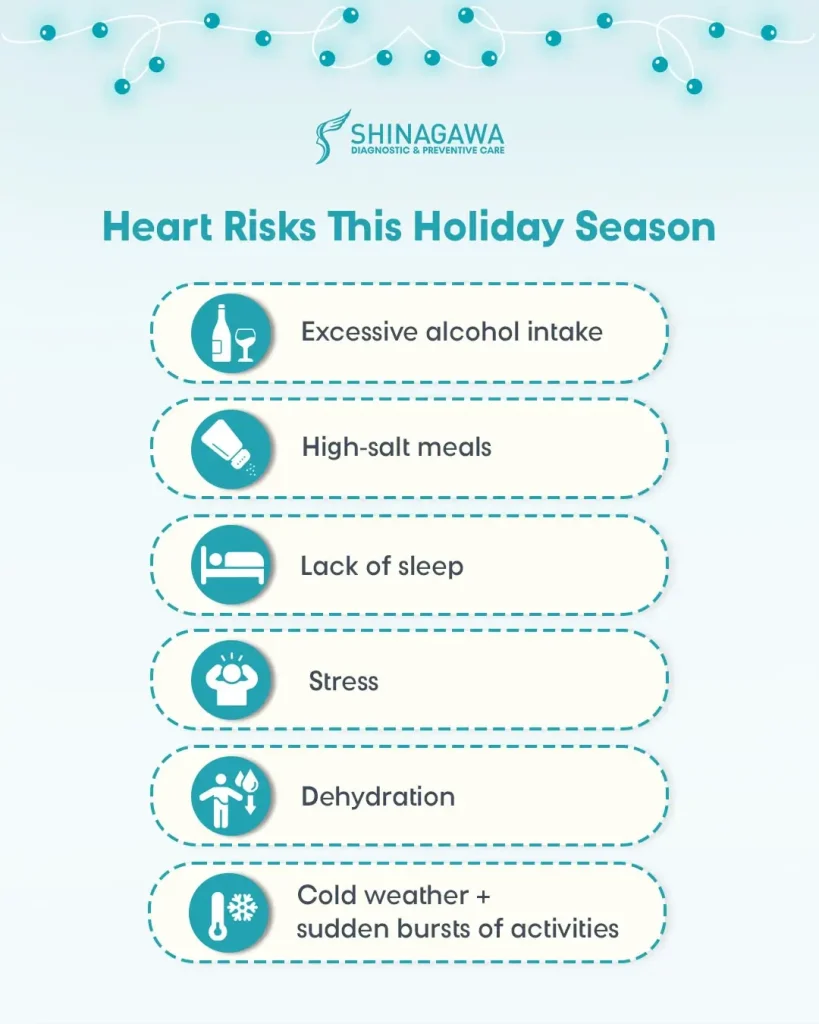
Holiday Heart Syndrome is often linked to sudden lifestyle changes that appear during the holiday season. One major factor is excessive alcohol intake, as binge drinking or consuming more alcohol than usual can disrupt the heart’s electrical signals. Even moderate drinkers who only indulge during the holidays can experience irregular rhythms after a night of heavy celebration.
Another contributor is the abundance of high-salt meals, which can elevate blood pressure, cause fluid retention, and increase the heart’s workload.
The busy holiday season often means less sleep, which increases stress in the body and can affect the heart’s rhythm. On top of that, emotional, social, and financial pressures during the holidays add even more strain. Because of this, some people may experience irregular heartbeats even if they usually feel healthy.
Dehydration is another subtle but common trigger. With colder temperatures, increased alcohol intake, and hectic schedules, many people forget to drink enough water. When your body lacks fluids and electrolytes, your heart becomes more prone to rhythm problems. Cold weather paired with sudden bursts of activity—such as rushing outdoors, carrying heavy shopping bags, or engaging in strenuous tasks—can also shock the cardiovascular system, causing sudden increases in heart rate and blood pressure.
Who Is at Risk?
Holiday Heart Syndrome does not discriminate, but certain groups are more likely to experience it.
People with hypertension or high cholesterol are particularly vulnerable because their cardiovascular system is already under strain. Interestingly, individuals who drink socially only during the holidays also face increased risk. Even if alcohol is not part of your regular routine, a sudden increase in consumption can surprise your heart and lead to irregular rhythms.
Some people may unknowingly have heart conditions that only reveal themselves under the intense lifestyle changes of the season. These silent issues, combined with holiday triggers, can make symptoms suddenly appear. However, even individuals who consider themselves perfectly healthy can develop Holiday Heart Syndrome when placed in high-stress environments or surrounded by celebrations that involve heavy drinking. This makes it important for everyone—not just those with known heart concerns—to stay mindful during the festive period.
Symptoms to Watch Out For
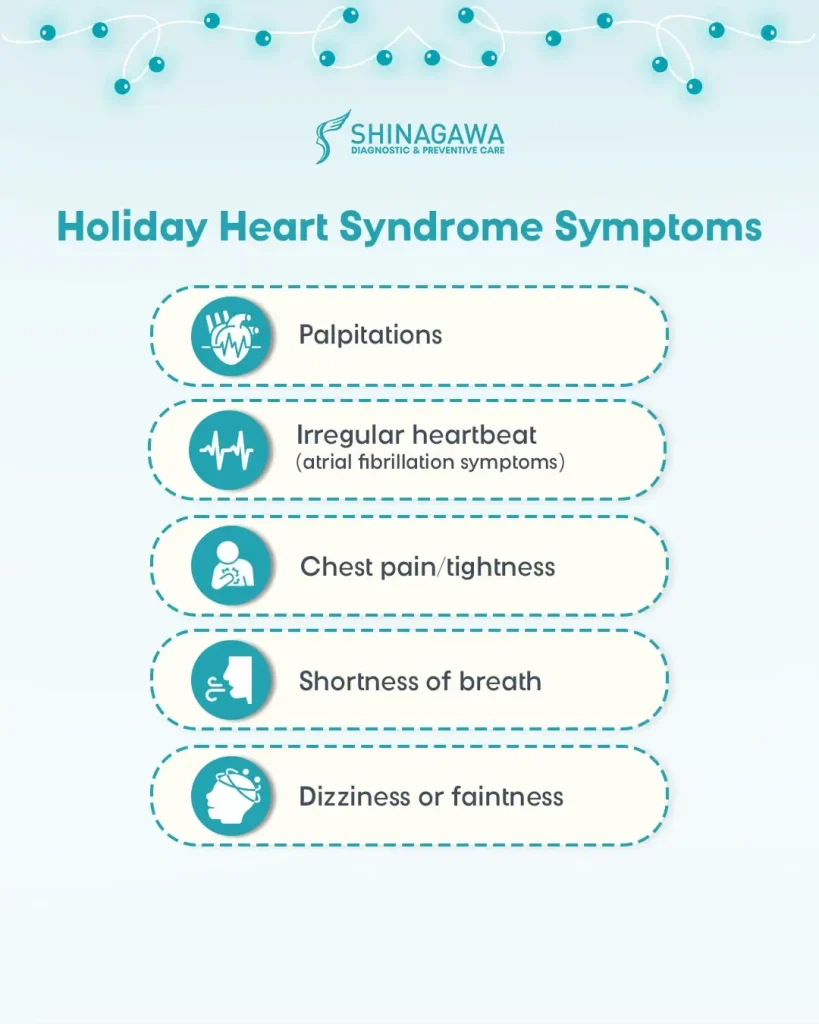
Recognizing the symptoms of Holiday Heart Syndrome can help you get timely medical attention. The most common sign is a noticeable change in your heartbeat, such as palpitations or an irregular rhythm that may feel like fluttering, skipping, or racing. Some people experience chest tightness or a sense of pressure, which may be mistaken for indigestion or fatigue from the festivities. Shortness of breath can also occur, especially when the irregular rhythm affects how efficiently the heart pumps blood.
Dizziness, lightheadedness, or even faintness can accompany these symptoms, particularly if the heart is beating too quickly or irregularly. These signs should never be ignored, especially when they occur after drinking alcohol, eating heavily, or experiencing stress. Seeking medical evaluation right away can prevent potential complications.
Get Your Health Checkup and Enjoy a Heart-Healthy Holiday
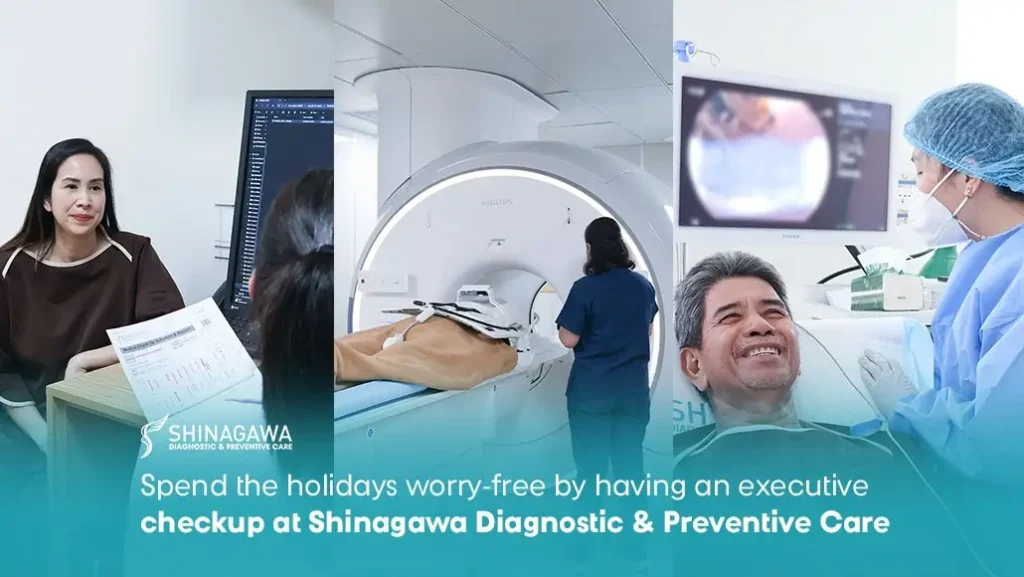
While it’s understandable that the holidays can be incredibly busy, getting a checkup beforehand is one of the most powerful steps you can take to detect early signs of Holiday Heart Syndrome. Knowing the state of your heart before the celebrations begin lets you enjoy the season without worry, while staying mindful of your health.
At Shinagawa Diagnostic, our health packages include essential screenings that help identify early indicators of Holiday Heart Syndrome. These include an Electrocardiogram (EKG) to evaluate your heart rhythm, a Chest X-ray to assess the size and condition of your heart and lungs, and blood tests to measure electrolyte levels and oxygen status.
Together, these tests provide a comprehensive look at your cardiovascular health and can detect potential issues early—long before they have the chance to disrupt your holiday plans.
Disclaimer: This article is for educational purposes only and does not replace professional medical advice. Please consult a qualified healthcare professional for an accurate diagnosis and treatment.